Understanding Nail Health: What You Need to Know
Your nails are more than just a canvas for polish; they reflect your overall health and nutritional status. Healthy nails are strong, smooth, and free from discoloration, protecting your fingertips.
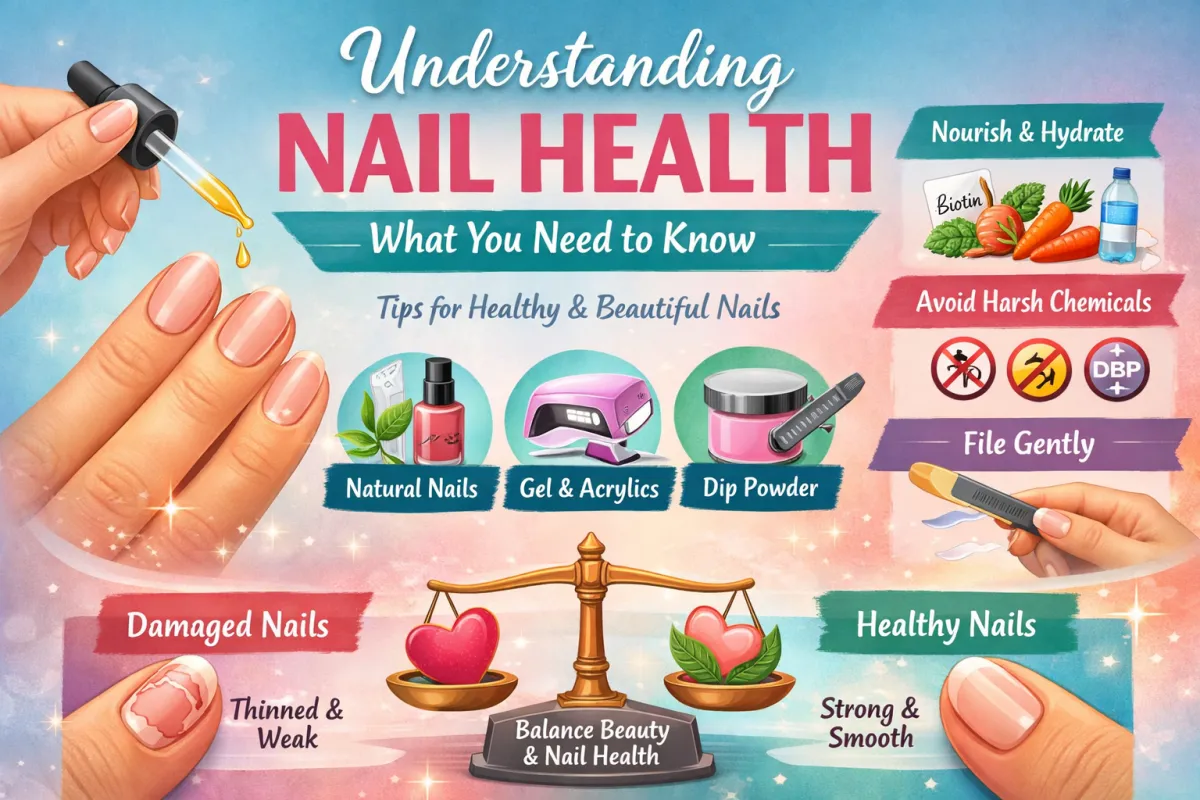
To maintain healthy nails, it's important to understand how different treatments impact the nail plate, cuticles, and surrounding skin. From traditional polishes to gel systems and dip powders, each option offers distinct benefits and potential drawbacks.
A "healthy" manicure supports your nails' natural strength and growth cycle, taking into account factors such as chemical exposure, application methods, and how long your nails can "breathe" between treatments.
Let's explore the various nail enhancement options and their effects on nail health.
Types of Nails and Their Health Implications
When choosing nail enhancements, it’s essential to understand their impact on your natural nails to maintain healthy nails. The main categories include:
Artificial Extensions:
Use tips or forms to add length and apply product layers.
Provide dramatic length and durability but require significant filing and buffing, which can weaken the nail plate over time.
Overlay Systems:
Applied directly over natural nails without adding length (e.g., dip powders).
Typically cause less damage due to minimal filing, preserving the integrity of your natural nails.
Natural Nail Treatments:
Includes regular polish, strengthening systems, and nurturing your existing nails.
Considered gentler and better for long-term nail health, as they work with your natural nails rather than against them.
Dermatologists recommend these approaches for maintaining healthy nails over time.
Each type offers distinct benefits and potential drawbacks, so it’s important to balance your aesthetic goals with long-term nail health priorities.
Comparison: Acrylic, Gel, and Dip Powder Nails
When searching for the best manicure for nail health, understanding how each enhancement type affects your natural nails is crucial. Acrylic nails involve mixing liquid monomer with polymer powder to create a hard coating that requires filing and buffing during removal, which can damage the nail bed.
Gel nails cure under UV light and offer more flexibility, but the curing process and acetone removal can still stress natural nails. Dip powder nails present a compelling middle ground. This enhancement method involves dipping nails in colored powder and sealing them with an activator, eliminating UV exposure while maintaining durability. The removal process is gentler than acrylics, requiring less aggressive filing.
However, all three methods carry risks when applied or removed improperly. The key is choosing a skilled technician who prioritizes nail health over speed, setting the stage for the right choice based on your specific lifestyle needs.
Hypothetical Scenario: Choosing the Right Type for Your Lifestyle
Consider Sarah, a nurse working 12-hour shifts who loves having polished nails but struggles with constant handwashing and sanitizing. For someone in her situation, nail health takes priority over elaborate designs. A gel manicure would likely serve her better than acrylics, as the sealed surface resists moisture and chemicals while allowing her natural nails to breathe between applications.
On the other hand, imagine Maya, a pianist who performs regularly. She needs short, strong nails that won't interfere with her playing. Nail shapes for health and strength suggest that shorter, rounded nails reduce the risk of breakage. For Maya, dip powder might provide the durability she needs without the bulk of acrylics.
These scenarios illustrate how lifestyle factors, from profession to hobbies , should guide your nail enhancement choices, making the decision truly personal rather than one-size-fits-all.
Hypothetical Scenario: Prioritizing Health Over Aesthetics
Meet Jennifer, a marketing executive who recently experienced nail damage from frequent gel manicures and decided to completely rethink her nail care approach. Instead of booking another enhancement appointment immediately, she chose to prioritize her natural nail health for three months.
Jennifer's strategy focused on strengthening her natural nails through proper nutrition, cuticle care, and switching to non-toxic nail polish brands that contain fewer harsh chemicals. She discovered that removing the mystery around healthy fingernails requires understanding how biotin, protein, and proper hydration directly affect nail strength and growth.
During her nail recovery, Jennifer learned to appreciate her natural nail shape and maintained a moderate length to prevent breakage. She found that this health-first approach not only restored her nail integrity but also saved her significant time and money previously spent on salon visits.
The result? Stronger, healthier nails that looked naturally beautiful without requiring constant professional maintenance or risking further damage from chemical processes.
This scenario illustrates that sometimes the healthiest choice is to step back from enhancements entirely, without sacrificing style, especially when exploring safer alternatives.
Non-Toxic and Natural Nail Solutions
When considering alternatives to traditional salon treatments, non-toxic nail products offer a healthier middle ground. Key benefits include:
Avoid Harsh Chemicals: Free from formaldehyde, toluene, and dibutyl phthalate, which are common in conventional polishes.
Water-Based Nail Polishes: Healthier alternatives, as they contain fewer volatile organic compounds and allow nails to breathe.
Shorter Durability: Typically lasts 3-5 days (vs weeks for synthetic polishes), but causes less damage during application and removal.
Plant-Based Strengthening Treatments: Enriched with biotin, keratin, and natural oils to nourish nails.
Supports Natural Growth: Helps improve nail condition and flexibility over time.
Frequent Nail Assessments: Encourages healthier nails by preventing prolonged chemical exposure, which can weaken the nail structure.
These natural solutions provide a solid foundation for long-term nail health, though they require more frequent application than synthetic options.
Maintaining Nail Health: Tips and Techniques
Regardless of whether you choose natural nails, dip powder nails, or other enhancement options, consistent maintenance practices determine your overall nail health outcomes. The foundation of healthy nails starts with proper hydration – both from within through adequate water intake and externally through regular cuticle oil application.
Proper filing technique makes a significant difference in preventing breaks and splits. Always file in one direction using a fine-grit file, avoiding the back-and-forth sawing motion that can weaken nail structure. Keep nails at a moderate length to reduce stress on the nail bed, and choose shapes that complement your lifestyle rather than following every trend. However, if you have a bad nail habit, you can damage your nails.
Regular maintenance schedules prevent minor issues from becoming major problems. This includes weekly cuticle care, daily moisturizing, and prompt attention to any signs of infection or damage. Even with protective treatments, your natural nails need breathing periods to recover and strengthen. However, even the most diligent care routine can be undermined by common missteps many people unknowingly make in their daily nail care.
Common Mistakes to Avoid in Nail Care
Even with the best intentions, many people unknowingly damage their nails through common missteps. One frequent error is excessive filing in back-and-forth motions, which can create micro-tears and weaken the nail structure. Instead, file in one direction from the outer edge toward the center.
Over-trimming cuticles represents another significant mistake. According to nail health research, cuticles serve as protective barriers against bacteria and infection. Rather than cutting them, gently push them back after softening with cuticle oil.
Many also fall into the trap of believing all enhancement options are equally damaging. For instance, BIAB (Builder in a Bottle) strengthens natural nails while providing coverage, yet some avoid it, assuming all gel systems cause harm. The key lies in understanding which treatments support nail health and which compromise it.
Skipping base coats when using regular polish is another oversight that can lead to staining and dehydration. This simple step creates a protective barrier that preserves your natural nail's integrity and improves polish adhesion.
Limitations and Considerations
While nail enhancements offer aesthetic benefits, it's crucial to understand their potential drawbacks before making decisions. Acrylic nail damage can occur when improper application techniques or harsh removal methods weaken the natural nail plate, leading to thinning and brittleness.
All enhancement options carry some level of risk. Frequent salon visits may expose nails to UV light during gel curing, while aggressive filing can permanently thin nail plates. Additionally, sealed nail environments can trap moisture, potentially creating conditions for fungal growth.
Individual factors also play a significant role in determining the best choice. People with naturally thin or weak nails may find certain enhancements too heavy, while those with allergies to specific chemicals should avoid corresponding products entirely.
Which Manicure is Best for Healthy Nails?
The path to healthier nails doesn't require complicated treatments or expensive enhancements. Based on dermatological evidence and nail health research, natural manicures consistently prove to be the optimal choice for maintaining strong, resilient nails over time.
Your nail care journey should prioritize gentle maintenance over dramatic transformation. Regular cuticle care, proper hydration, and protective base coats form the foundation of nail wellness without compromising your natural nail structure.
The healthiest approach balances beauty goals with long-term nail integrity. While gel and acrylic options may offer temporary aesthetic appeal, your natural nails will thank you for choosing gentler alternatives that support rather than stress their growth and strength.
Key Takeaways
When it comes to nail health, the evidence is clear: a natural manicure consistently emerges as the safest choice for your nails' long-term well-being. This gentle approach preserves your nails' natural structure while delivering polished results.
The healthiest nail treatments share common characteristics: minimal chemical exposure, gentle application techniques, and preservation of the natural nail plate. Whether you choose gel, regular polish, or go completely natural, prioritizing proper nail care habits makes the biggest difference in nail health outcomes.